

Importance
1. Importance of the Sector
Tourism is a vital service sector that enables countries to monetize their natural resources, including landmarks, cultural heritage sites, and other attractions. The Gambia possesses exceptional tourism assets: the entire length of the Gambia River, pristine beaches, Baboon Islands with their chimpanzee populations, forest parks, and remarkable bird diversity.
The sector plays a crucial role in our economy, contributing 9% of GDP and generating 7% of employment. Many small businesses depend on tourism, making it one of our top two foreign exchange earners. A dynamic, growing tourism sector represents a significant opportunity for economic growth and national development.
2. Current Challenges in the Tourism Sector
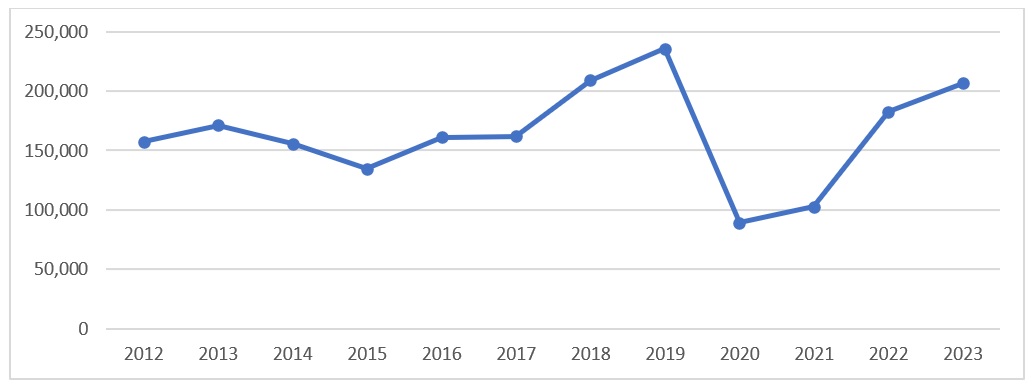
Despite seemingly positive arrival numbers, the tourism sector falls far short of its potential. Even before COVID-19, tourist growth rates remained low compared to neighboring countries, revealing leadership failures in marketing our true tourism potential.
Figure 1: Tourism arrivals in The Gambia
a. Passive Tourism Strategy
Our satisfaction with modest growth in tourist arrivals reflects a lack of imagination in leveraging tourism potential. Marketing materials have barely evolved since the Jawara era, and arrivals remain concentrated in the November-April period. This indicates passive policy-making driven by tourists seeking warm destinations during European winters, rather than proactive opportunity creation.
The problem is acute: many low-cost countries offer sandy beaches and warm weather. Senegal has begun attracting tourists traditionally drawn to The Gambia, with some Saly hotels now hosting over 50% British tourists—a clear warning signal for our policymakers.
b. Over-reliance on Limited Markets
Our tourism sector lacks resilience due to dependence on a small group of countries—80% of tourists come from just 10 nations. Any shock in these source countries would devastate our sector. Additionally, over half our tourists are elderly repeat visitors, threatening future sustainability as this demographic ages and alternative destinations emerge.
c. Limited Diversity of Offerings
We inadequately manage the natural resources that form our tourism backbone. Most tourists remain on beaches, rarely exploring other areas. Even our beaches suffer from poor stewardship—companies dump fish waste with impunity, damaging both environment and tourism appeal.
The country has tremendous ecotourism potential requiring proactive strategy linking the sector with ecological resources while minimizing environmental impact. Numerous inland sites could attract tourists beyond coastal destinations. The Gambia River offers environmentally sustainable transportation, providing better access to these sites while complementing ecotourism goals.

current state
3. Government Track Record in the Sector
Government handling of tourism mirrors other sectors through neglect and poor implementation. The Gambia operates as if land allocation in the Tourism Development Area (TDA) constitutes the government's primary role. This allocation process is both cumbersome and opaque, with unpredictable timelines where connections matter more than merit, as investigative journalists have revealed.
There's no recognition of tourism's linkages with other sectors. Tourism has strong backward linkages with agriculture through localized food and beverage supply chains, meaning hotel vendors are typically local farmers and agribusiness enterprises.
Instead of developing positive intersectoral linkages, we unwittingly encourage negative ones that harm tourism. Beach erosion worsens due to illegal sand mining, while the government ignores environmental destruction by granting licenses to fish processing companies that violate environmental regulations.
Despite receiving millions in funding, the government shows no meaningful sector results. The World Bank recently provided $68 million to diversify and increase tourism resilience. As of June 2025, implementation lags substantially behind schedule—less than a quarter of funds have been disbursed due to delays, symptomatic of this government's inability to properly implement grants for such a crucial sector.
intervention
4. PPA’s Solutions
We must expand our imagination of what's possible. A dynamic tourism sector producing increasing arrivals is achievable with the right government implementing growth-inducing policies and strategies. Success requires understanding that tourism arrivals are partly controllable through services, incentives, and sound policy execution.
a. Tourism Infrastructure Improvement
Infrastructure development around our TDA is abysmal. Roads remain poor quality, street lights are absent, sidewalks unpaved, drainage systems undeveloped, and garbage frequently litters the area. There's a general absence of aesthetics and planning in hotel and amenity construction, with no urban or tourism development master plan guiding proper placement of facilities and services.
Modernizing and improving facilities will revitalize the TDA and attract Gambians. Greater Gambian patronage of TDA businesses will complement the tourism sector generally. Our government will invest in tourism infrastructure to generate sector demand and capitalize on our proximity to Europe. These investments will attract tourists while creating local business opportunities and jobs.
b. Developing Inland Attractions
Numerous inland attractions remain under-exploited despite their potential to draw large numbers of tourists. These include substantial chimpanzee populations on Baboon Islands in the Central River Region, surrounded by large hippo populations.
Inland attractions can draw tourists outside the traditional November-April season, enabling year-round tourism and attracting visitors from wider geographic markets, enhancing sector resilience. This will create greater opportunities for SMEs and youth employment.
c. Ecotourism Development
Ecotourism potential remains highly unexploited in The Gambia. The Barrow government's current approach reflects either flawed understanding or implementation failure. Ecotourism involves environmentally sustainable visits to natural areas that promote ecological conservation—a marked contrast with our current reality of accelerating environmental degradation.
d. Support for Small Gambian Hotel Owners
Several Gambian entrepreneurs own small hotels but face uphill battles attracting tourists compared to large hotel owners. Government must level the playing field by promoting Gambian-owned establishments in tourism marketing, ensuring entrepreneurs without connections and capital of large hotels aren't disadvantaged. Many tourists arrive on packaged tours that bypass small boutique hotels. The current approach of tour operator-driven tourism will be restructured to ensure that all hotels are included in the accommodation offerings.
Our government will provide necessary support to Gambian hotel owners as part of a strategy to maximize and broaden this sector's economic benefits, while ensuring other service providers—restaurants, transportation, guides—receive similar support.
e. Linking tourism incentives to domestic sourcing
To enhance meaningful linkages with other productive sectors (horticulture, poultry, aquaculture, etc.), tourism incentives will be linked to evidence of domestic sourcing as is done in destinations like Seychelles, Kenya amongst others.
solutions
Follow us on @ Electionify